

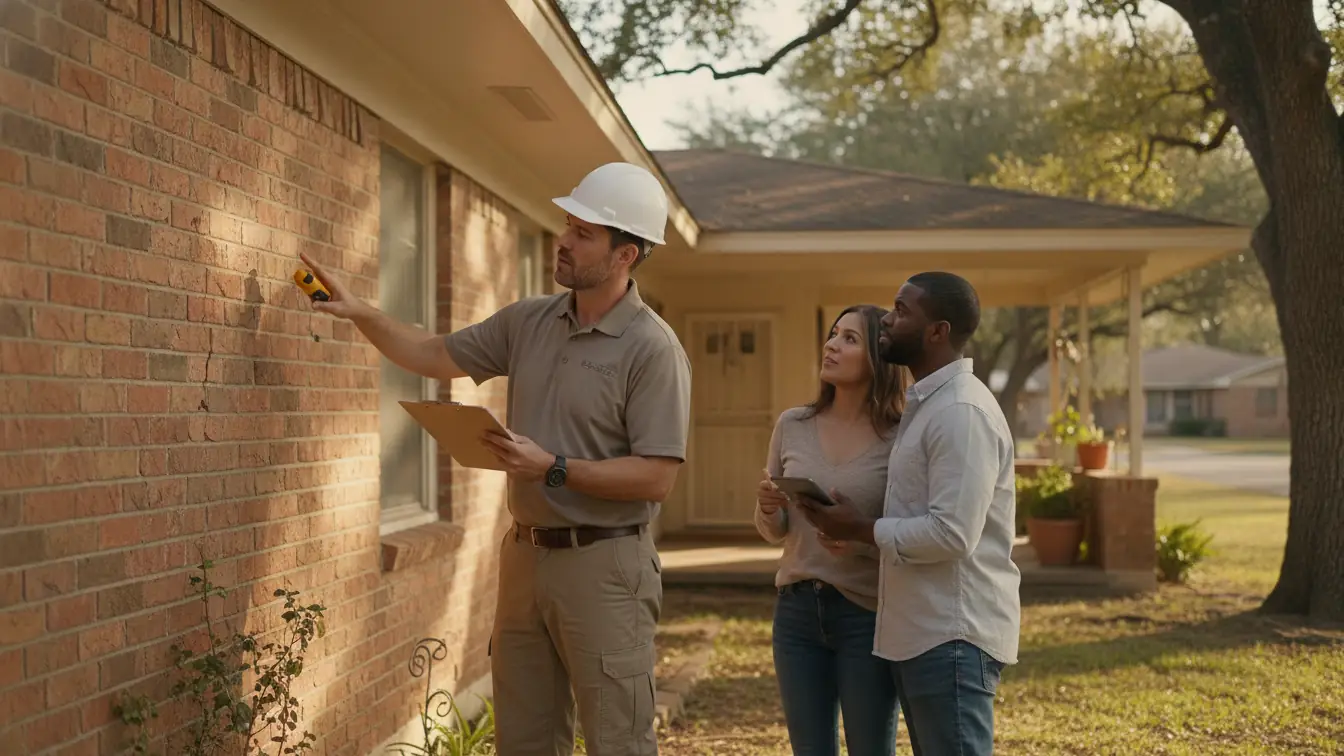
Finding a house you can afford in Texas is hard enough, and nothing is more frustrating than going under contract only to have your mortgage held up because the property itself fails the FHA appraisal.
This 2026 guide breaks down the FHA minimum property standards Texas homebuyers and sellers need to know from HUD Single Family Housing Policy Handbook 4000.1 (Update 18, issued August 12, 2026, with most changes required to be implemented no later than November 10, 2026).
Check Your Texas FHA Loan Eligibility
You will walk away with a clear FHA inspection checklist, rules for roofs, foundations, wells, septic systems, and pre-1978 paint, plus practical options if a home needs repairs before closing.
What Are FHA Minimum Property Requirements and Standards?
When you apply for FHA Loans in Texas, the lender evaluates both your finances and the condition of the house. While borrowers must meet Texas FHA Loan Requirements (2026) and stay within the Texas FHA Loan Limits by County (2026), the house must meet HUD's Property Acceptability Criteria.
According to HUD Handbook 4000.1 (Section II.A.3.a), HUD groups these rules into two categories:
- Minimum Property Requirements (MPR): The baseline rules that require all FHA homes to be safe, sound, and secure.
- Minimum Property Standards (MPS): The regulatory construction standards that apply specifically to New Construction.
In everyday conversation, buyers and real estate agents use "FHA minimum property standards" and "FHA minimum property requirements" interchangeably. The lender underwrites the FHA appraisal to confirm the property is adequate collateral and meets HUD's Property Acceptability Criteria.
FHA Appraisal Requirements in Texas: The 3 Core Goals
Under HUD Handbook 4000.1 (Section II.D.3.n), required repairs are limited to what is needed to:
- Maintain safety, security, and soundness of the property.
- Preserve marketability of the property.
- Protect the health and safety of the occupants.
Cosmetic or minor items are not required repairs. HUD's examples include missing handrails that pose no safety threat, torn screens, cracked glass, and defective interior paint in homes built in or after 1978.
Basic Health, Safety, and Living Unit Standards
Before checking individual mechanical parts, the appraiser verifies that the home functions as a complete, livable residence. According to HUD Handbook 4000.1 (Section II.D.3.b.vii(A)), every living unit must provide:
- Safe, potable water: A continuing supply of safe drinking water delivered under adequate pressure.
- Sanitary facilities: Safe sewage disposal and at least one bathroom that includes a toilet, a sink, and a bathtub or shower.
- Kitchen facilities: A kitchen area equipped with at least a sink with potable running water and a utility hookup for a stove.
- Heating and hot water: Domestic hot water and heating adequate for healthful and comfortable living.
- Electricity: Electricity adequate for lighting and mechanical equipment.
- Adequate space: The handbook requires adequate space in each living unit.
One common myth is that FHA loans ban small homes. In fact, HUD Handbook 4000.1 states that FHA has no minimum size requirement for 1-to-4 unit dwellings or condo units (see our guide to Texas Condo Loans).
Check Your Texas FHA Loan Eligibility
Detailed FHA Inspection Checklist by System
When walking through a property, you and your agent can use the following breakdown from HUD Handbook 4000.1 to spot potential appraisal flags before you make an offer.
| Home Area / System | HUD Handbook 4000.1 Standard | What Triggers an FHA Repair or Inspection |
|---|---|---|
| Roof (II.D.3.g) | Must keep out moisture and have at least 2 years of remaining physical life. | Less than 2 years of remaining life (appraisal is made subject to a professional roofer inspection). |
| Foundation & Structure (II.D.3.h, k) | Must be serviceable for the life of the loan; basements must be free of dampness or wetness. | Obvious structural problems, foundation deficiencies, wet basements, or non-working sump pumps. |
| Attic & Crawl Space (II.D.3.j, l) | Appraiser must visually observe accessible attic and crawl space areas. | Water stains, poor ventilation, mold odors, or excess dampness in the crawl space. |
| Heating & Cooling (II.D.3.f) | Permanent heat must automatically warm living areas to at least 50°F. Central AC is not required, but must work if installed. | Missing or broken permanent heat; installed central AC that does not work (appraiser reports cost to cure). |
| Electrical (II.D.3.f) | Must be safe to operate with adequate amperage for the home. | Visible frayed or exposed wiring, or systems that do not work when the appraiser operates them. |
| Plumbing (II.D.3.f) | Adequate water pressure, flow, and waste removal. | Non-working plumbing or a water heater missing a temperature and pressure-relief (TPR) valve with discharge piping. |
| Paint: Pre-1978 Homes (II.D.3.m.i) | Appraiser must note all defective paint on interior and exterior surfaces (including fences, sheds, and detached garages). | Any cracking, scaling, chipping, peeling, or loose paint (repair required under EPA and 24 CFR 200.810(c) rules). |
| Paint: 1978 & Newer (II.D.3.i) | Defective interior paint is treated as cosmetic. | Defective exterior paint that exposes the underlying subsurface. |
| Termites / WDI (II.D.3.m.iii, II.A.3.a) | Property must be free of wood-destroying insects and organisms. | Evidence or notice of infestation or prior treatment (triggers a qualified pest control specialist inspection). |
| Private Wells (II.D.3.o.v) | Must meet local/state health standards (or EPA standards if none exist) and have at least a 42-gallon pressure tank (or equivalent). | Bad taste/smell/appearance, corrosion, purification systems, or contamination sources within 1/4 mile. |
| Septic Systems (II.D.3.p, II.A.3.a) | Must dispose of waste without health hazards and meet local health department rules when public sewer is not feasible. | Signs of failure trigger an inspection; the lender requires public or community sewer connection when feasible at reasonable cost. |
Utilities and Mechanical Systems
Under Section II.D.3.f, mechanical systems must be safe to operate, protected from destructive elements, have adequate capacity, and offer reasonable future utility.
The FHA appraiser is required to actually turn on and operate the plumbing, heating, and electrical systems during the visit. If the utilities are turned off at the time of the appraisal, the appraiser cannot clear the home, and the appraisal will be made subject to a reinspection once the utilities are on.
For heating and cooling:
- Heating: Every home must have a permanent heating system capable of automatically heating the living areas to at least 50 degrees Fahrenheit. It must run on a readily available fuel and operate for extended periods without human intervention.
- Air conditioning: HUD does not require central air conditioning. However, if a central AC system is installed, it must work. If it does not work, the appraiser must report the "cost to cure" (the estimated cost to fix it).
For plumbing and electrical:
- Electrical: There can be no visible frayed or exposed wires, and the electrical panel must provide adequate amperage for the dwelling.
- Plumbing: The plumbing must supply adequate pressure, flow, and waste removal. The water heater must be equipped with a temperature and pressure-relief (TPR) valve and proper discharge piping.
Roof Requirements
Under Section II.D.3.g, the roof covering must keep out moisture and have at least 2 years of remaining physical life. If it has less than two years of life left, the appraisal is made subject to an inspection by a professional roofer.
Foundation, Structure, Attics, and Crawl Spaces
According to Sections II.D.3.h and II.D.3.k, the appraiser must evaluate the structure and foundation so the lender can determine whether the building will remain serviceable for the life of the mortgage.
- Foundations: Any structural or foundation deficiencies must be described in the appraisal report, along with any required repairs or inspections.
- Basements: Any basement must be free of dampness, wetness, or obvious structural problems, and any sump pump must be working.
- Attics and crawl spaces (Sections II.D.3.j and II.D.3.l): The appraiser must visually observe accessible attic and crawl-space areas. Signs of a deficient condition—such as water stains, poor ventilation, a mold smell, or excess dampness in a crawl space—will trigger an inspection or repair condition.
Defective Paint and Lead-Based Paint (The 1978 Rule)
FHA's paint rules depend on the year the home was built:
- Homes built before 1978 (Section II.D.3.m.i): The appraiser must note all defective paint—defined as cracking, scaling, chipping, peeling, or loose paint—on both interior and exterior surfaces. Exterior surfaces include not just the house, but also fences, detached garages, storage sheds, and other outbuildings. All defective paint must be repaired in compliance with 24 CFR 200.810(c) and EPA requirements. Pre-1978 condominium units follow similar rules that also extend to common areas.
- Homes built in or after 1978 (Section II.D.3.i and II.D.3.n.ii): Defective interior paint is treated as cosmetic and does not require repair. However, the appraiser still must require repair of defective exterior paint that exposes the subsurface.
Termites and Wood-Destroying Insects
Under Section II.D.3.m.iii, the appraiser observes the foundation and perimeter of the home during the walkthrough. If the appraiser sees evidence of wood-destroying insects or organisms—or even notice of a prior treatment—the appraisal must be made subject to an inspection by a qualified pest control specialist.
Under Section II.A.3.a (Property Acceptability Criteria, dated November 10, 2026), the lender must confirm that existing properties are free of wood-destroying insects and organisms and obtain the pest inspection and evidence of treatment whenever required. If soil poisoning is used as a treatment method, it is not acceptable unless the lender is assured it will not endanger the property's water supply.
Rural Texas Properties: Private Wells and Septic Systems
If you are buying a home on acreage or outside city utility lines—and comparing an FHA mortgage with USDA Loans in Texas (2026)—pay close attention to HUD's water and sewage rules.
Individual Water Supply Systems / Wells (Section II.D.3.o.v):
- Water quality: Well water must meet the standards of the local or state health authority. If no local or state standards exist, the EPA's National Primary Drinking Water regulations (40 CFR 141–142) apply.
- Pressure tank: The system must have a pressure tank of at least 42 gallons, or a pressurizing device that delivers equivalent performance.
- Unacceptable water sources: Water sources that rely on mechanical chlorinators, springs, lakes, rivers, sand-point wells, or artesian wells are considered deficiencies. A well located inside the foundation walls of an existing house is also a deficiency unless local rules allow it, it is common in the market, and it does not hurt marketability.
- Mandatory water testing triggers: An inspection or water test is required if the home uses a purification system for contaminants, shows pipe corrosion, has water with a bad taste, smell, or appearance, or sits within one-quarter mile (1/4 mile) of intensive agriculture, coal mining, gas drilling, a dump, a landfill, a factory, a gas station, or a dry cleaner.
- Shared wells (Section II.D.3.o.vi): A shared well may serve 2 to 4 homes, provided it is backed by a binding Shared Well Agreement.
Onsite Sewage Disposal / Septic Systems (Section II.D.3.p and II.A.3.a):
- Visual check: The appraiser visually observes the septic area and must require an inspection if there are signs of system failure. The system must dispose of all domestic waste without creating a nuisance or health hazard.
- Public sewer connection: The appraiser reports whether public sewer service is available. The lender must require the property to connect to a public or community sewer system when doing so is feasible at a reasonable cost. Otherwise, a properly functioning septic system that meets local health department requirements is acceptable. A failing septic system must be repaired or replaced, or the property is rejected.
Check Your Texas FHA Loan Eligibility
How FHA Appraisal Repairs and Repair Escrows Work
What happens if the FHA appraiser flags peeling paint on a 1965 ranch house or a water heater missing its TPR valve? It does not mean your loan is dead.
Who Decides Which Repairs Are Required?
Under HUD Handbook 4000.1 (Section II.D.3.n), the appraiser identifies physical deficiencies and estimates the cost to cure them, but the lender—not the appraiser—decides which repairs are required.
Cosmetic or minor items are not required repairs. According to the handbook, examples include:
- Missing handrails that do not pose a threat to safety
- Torn window screens
- Cracked window glass that is not a safety hazard
- Defective interior paint in homes built in or after 1978
Completing Repairs Before Closing vs. Repair Escrow Holdbacks
When the lender requires a repair, these are the main paths to consider:
- Complete the repairs before closing: Who arranges and pays for the work is negotiated in your purchase contract. Separately, FHA allows interested parties such as the seller to contribute up to 6% of the sales price toward origination fees, other closing costs, prepaids, and discount points.
- Set up an FHA Repair Completion Escrow (Holdback): If repairs on an existing home cannot be finished before the closing date, HUD Handbook 4000.1 (Sections II.A.3.a.iii and II.A.6.a.viii(B)) allows the lender to establish a repair escrow at closing, provided all of these rules are met:
- The home must already be habitable and safe to occupy at closing.
- The escrow account must hold enough funds to cover the full repair cost.
- Borrower labor ("sweat equity") cannot be included in the repair cost calculation.
- The lender executes Form HUD-92300 (Mortgagee's Assurance of Completion), certifies the completed work on Form HUD-92051 (Compliance Inspection Report), and files the Escrow Closeout Certification in FHA Connection within 30 days of closing out the escrow.
- Ask about an FHA 203(k) Rehabilitation Loan: If the house is not habitable and safe at closing, a repair escrow is not available. For homes needing remodeling or repairs, ask your lender about FHA 203(k) Loans in Texas. The Limited 203(k) covers minor remodeling and nonstructural repairs with total rehabilitation costs up to $75,000 (up to 9 months to complete), while the Standard 203(k) covers remodeling and repairs including structural work, with a $5,000 minimum in eligible improvements and up to 12 months to finish.
Smart Tips for Texas Buyers Shopping for Older Homes
If you are house-hunting in established Texas neighborhoods with pre-1978 homes or properties outside city limits, a few proactive steps can save you time:
- Confirm all utilities will be on before the appraiser arrives: Ask your agent to verify with the listing agent that the utilities are on. If they are off, the appraisal is made subject to a reinspection once they are on.
- Walk the exterior of pre-1978 properties first: Before submitting an offer on a home built before 1978, check the eaves, window sills, porch railings, wood fences, and backyard sheds. Defective paint on outbuildings counts for pre-1978 homes, so it helps to know about it before you negotiate.
- Check the water heater and AC early: Look for the TPR valve and discharge pipe on the side or top of the water heater, and confirm that any installed central AC unit cools properly.
- Ask about prior termite treatments: Because evidence of past wood-destroying insect treatment triggers a pest inspection requirement under Handbook 4000.1, ask the seller early if they have a current wood-destroying insect report or treatment history.
- Look at Texas buyer assistance: You can compare assistance options in our guide to 58 Texas First-Time Home Buyer Grants & Programs (2026) or review all Requirements to Buy a House in Texas before shopping.
Next Steps: Check Your Texas FHA Eligibility
FHA minimum property requirements exist to make sure the home you buy in Texas is safe, sound, and secure. Whether you are eyeing a brand-new build, a mid-century fixer-upper that might fit an FHA 203(k) loan, or a country property on a well and septic system, our team at Make Texas Your Home can help you check your eligibility, compare Texas Home Loan Options, and get connected with an FHA lender who can review the property and your numbers.
Ready to Get Started?
Check your eligibility in under 2 minutes. No credit pull, no obligation.
Get our Texas updates in your Google feed
Add Make Texas Your Home as a preferred source to see our rate, grant, and program updates more often in Google Search.